Tuesday — The Dividing Wall Torn Down
New Testament Scripture
Ephesians 2:14
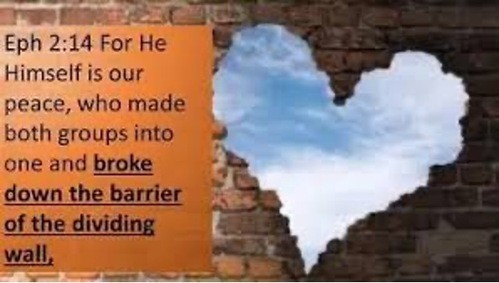
“For he is our peace; in his flesh he has made both groups into one and has broken down the dividing wall, that is, the hostility between us.”
Old Testament Scripture
Isaiah 2:4
“They shall beat their swords into plowshares…”
Hostility Has a Structure
When Paul writes these words, he is not speaking metaphorically about minor disagreements. He is addressing one of the deepest fractures in the ancient world: Jew and Gentile.
This was not a mild cultural tension. It was centuries of suspicion, separation, and theological distinction. The Law itself marked Israel out as distinct. Dietary practices, circumcision, Sabbath observance — these were not preferences. They were identity.
Even the temple bore witness to division.
Archaeologists have uncovered inscriptions from Herod’s temple warning Gentiles not to pass beyond a certain barrier — under penalty of death. There was literally a low wall.
Division was not imaginary. It was architectural. And Paul says Christ has broken it down.
Notice the language carefully. Paul does not say Jesus negotiated a truce. He does not say He encouraged mutual respect. He says He is our peace. In His flesh — in His crucified body — He made both groups one.
Peace is not advice - It is an accomplishment.
Peace Requires Demolition
The cross does not merely soften hostility - It kills it. The cross judges the pride of every tribe. No one stands above another at the foot of the cross. Jew and Gentile alike needed mercy. The religious needed mercy. The pagan needed mercy. The insider and the outsider both stand empty-handed.
The cross exposes the futility of defining ourselves over against others.
The wall is not renovated. It is destroyed. I find that both comforting and unsettling.
Comforting — because I do not have to prove my worth by outperforming someone else.
Challenging — because it can often mean new tensions in the unresolved conflict.
Isaiah’s Vision: Weapons Reforged
Isaiah foresaw a day when swords would be beaten into plowshares. Instruments of war transformed into tools of cultivation. That image is not sentimental. It is violent in its own way. Metal must be reheated, reshaped, hammered.
The cross is that forge. The hostility that once armed us against one another is reshaped into something life-giving. The energy once spent guarding boundaries becomes energy spent cultivating community.
Peace is not passive. It is forged.
Where Are Our Walls?
We may not have stone partitions in our sanctuaries, but we construct barriers just as real. Sometimes our walls are theological — drawn not around the core of the gospel, but around secondary loyalties.
The gospel does not bless those divisions.
That does not mean truth is abandoned or conviction erased. Unity is not uniformity. But it does mean that every other identity is relativized beneath one greater allegiance:
Jesus is Lord.
If Christ has torn down the dividing wall, the church must not rebuild it — not subtly, not politely, not in the name of comfort.
A Different Kind of Strength
There is something profoundly strong about a community that refuses hostility. In a world that organizes itself around rivalry and outrage, a reconciled people look almost strange.
But that strangeness is evidence of new creation.
Think of times when we see former opponents share a table…
Of back when political differences did not fracture fellowship…
The world catches a glimpse of something it cannot manufacture. The dividing wall has been torn down. The question is not whether Christ accomplished it. The question is whether we will live as if it is true.
Prayer
Lord Jesus,
You are our peace.
You did not negotiate with hostility — You crucified it.
Search our hearts for the walls we quietly maintain.
Give us courage to let them fall.
Make this church a living sign
that the dividing wall has truly been torn down.
Amen.
New Testament Scripture
Ephesians 2:14
“For he is our peace; in his flesh he has made both groups into one and has broken down the dividing wall, that is, the hostility between us.”
Old Testament Scripture
Isaiah 2:4
“They shall beat their swords into plowshares…”
Hostility Has a Structure
When Paul writes these words, he is not speaking metaphorically about minor disagreements. He is addressing one of the deepest fractures in the ancient world: Jew and Gentile.
This was not a mild cultural tension. It was centuries of suspicion, separation, and theological distinction. The Law itself marked Israel out as distinct. Dietary practices, circumcision, Sabbath observance — these were not preferences. They were identity.
Even the temple bore witness to division.
Archaeologists have uncovered inscriptions from Herod’s temple warning Gentiles not to pass beyond a certain barrier — under penalty of death. There was literally a low wall.
Division was not imaginary. It was architectural. And Paul says Christ has broken it down.
Notice the language carefully. Paul does not say Jesus negotiated a truce. He does not say He encouraged mutual respect. He says He is our peace. In His flesh — in His crucified body — He made both groups one.
Peace is not advice - It is an accomplishment.
Peace Requires Demolition
The cross does not merely soften hostility - It kills it. The cross judges the pride of every tribe. No one stands above another at the foot of the cross. Jew and Gentile alike needed mercy. The religious needed mercy. The pagan needed mercy. The insider and the outsider both stand empty-handed.
The cross exposes the futility of defining ourselves over against others.
The wall is not renovated. It is destroyed. I find that both comforting and unsettling.
Comforting — because I do not have to prove my worth by outperforming someone else.
Challenging — because it can often mean new tensions in the unresolved conflict.
Isaiah’s Vision: Weapons Reforged
Isaiah foresaw a day when swords would be beaten into plowshares. Instruments of war transformed into tools of cultivation. That image is not sentimental. It is violent in its own way. Metal must be reheated, reshaped, hammered.
The cross is that forge. The hostility that once armed us against one another is reshaped into something life-giving. The energy once spent guarding boundaries becomes energy spent cultivating community.
Peace is not passive. It is forged.
Where Are Our Walls?
We may not have stone partitions in our sanctuaries, but we construct barriers just as real. Sometimes our walls are theological — drawn not around the core of the gospel, but around secondary loyalties.
The gospel does not bless those divisions.
That does not mean truth is abandoned or conviction erased. Unity is not uniformity. But it does mean that every other identity is relativized beneath one greater allegiance:
Jesus is Lord.
If Christ has torn down the dividing wall, the church must not rebuild it — not subtly, not politely, not in the name of comfort.
A Different Kind of Strength
There is something profoundly strong about a community that refuses hostility. In a world that organizes itself around rivalry and outrage, a reconciled people look almost strange.
But that strangeness is evidence of new creation.
Think of times when we see former opponents share a table…
Of back when political differences did not fracture fellowship…
The world catches a glimpse of something it cannot manufacture. The dividing wall has been torn down. The question is not whether Christ accomplished it. The question is whether we will live as if it is true.
Prayer
Lord Jesus,
You are our peace.
You did not negotiate with hostility — You crucified it.
Search our hearts for the walls we quietly maintain.
Give us courage to let them fall.
Make this church a living sign
that the dividing wall has truly been torn down.
Amen.
Posted in Easter Season 2026
No Comments