Wednesday — The Wounds of Renewal
New Testament Scripture
John 20:26–27
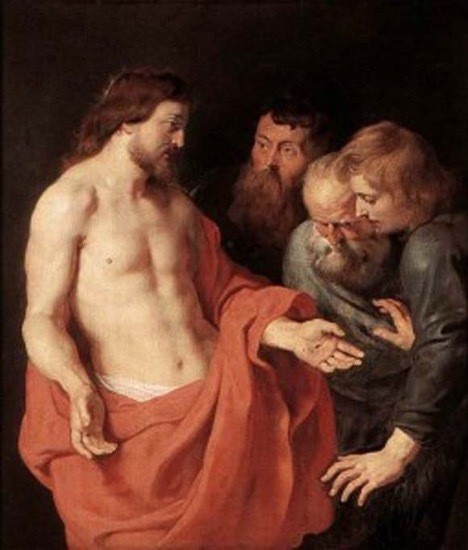
“Although the doors were shut, Jesus came and stood among them and said, ‘Peace be with you.’ Then he said to Thomas, ‘Put your finger here and see my hands. Reach out your hand and put it in my side. Do not doubt but believe.’”
Old Testament Scripture
Isaiah 53:5
“But he was wounded for our transgressions, crushed for our iniquities; upon him was the punishment that made us whole, and by his bruises we are healed.”
I jump a little out of order today – because I want to get here first. I’ll come back to it again on Friday. I’ve been hitting heavy in Isaiah 53 for all of Lent. Can’t help myself to jump in because I don’t want to save Thomas for later as it makes the text feel a bit disconnected.
I think Thomas, more so than the other disciples, was keenly aware of Isaiah 53 and that’s why he needed evidence.
A Risen Body Still Marked
When Jesus appears to the disciples after His resurrection, He does not conceal His wounds. The doors are locked. Fear still lingers in the room. Yet suddenly He stands among them and speaks peace.
Then He turns to Thomas.
Thomas had not been present the first time Jesus appeared. He had insisted that he would not believe unless he saw and touched the wounds himself. Jesus does not rebuke him harshly. Instead, He invites him closer. “Put your finger here… reach out your hand.”
The risen Christ still bears scars. That detail matters. Resurrection does not erase crucifixion. It transforms it.
The wounds are no longer instruments of death. They are signs of victory. What once signaled shame now reveals glory.
The Servant Who Suffers — and Lives
Isaiah had spoken centuries earlier of a Servant who would be wounded for the sake of others. The language is striking: wounded, crushed, pierced — yet through those wounds comes healing.
For generations, Israel carried that promise without fully seeing how it would unfold. At the cross, the Servant bears sin. At the resurrection, the Servant stands alive — still marked, yet no longer defeated.
The scars testify that redemption was not symbolic. It was costly. God did not save from a distance. He entered suffering. And He did not abandon it.
When Jesus invites Thomas to touch His wounds, He is not proving that He survived. He is revealing continuity. I think too many people miss this point. Jesus – is the same today as yesterday and tomorrow!
The one who was crucified is the one who is risen. There is no replacement body, no erasure of history. The story of suffering is not deleted; it is redeemed.
This tells us something essential about new creation. God does not discard what has been wounded. He restores it.
Peace Through Pierced Hands
Notice the order of events in the room. Jesus speaks peace before He shows His wounds. Peace is not denial of what happened. It is grounded in it.
“Peace be with you” is not a greeting alone. It is an announcement. Hostility has been dealt with. The cross absorbed sin’s violence. The resurrection confirms that death could not hold Him.
The wounds are not evidence of defeat; they are the reason peace is possible.
Thomas responds with one of the clearest confessions in the Gospels: “My Lord and my God.” The sight of the wounds leads to worship. Like I said – of all those in the room – Thomas understand the prophesy that has been revealed.
New creation does not come through forgetting the cross. It comes through passing through it.
What This Means for Us
We often imagine renewal as a return to an untouched state — as if redemption means going back to how things were before damage occurred. But the resurrection shows something different.
Jesus does not rise unscarred.
The marks remain, not as ongoing pain, but as enduring testimony. In the book of Revelation, John sees the exalted Christ as “a Lamb standing as though it had been slain.” Even in glory, the memory of sacrifice remains.
This means our wounds are not beyond redemption.
The places where we have suffered — betrayal, grief, failure, injustice — are not simply erased in Christ. They can be transformed. What once marked us with shame can become a sign of grace.
This does not romanticize suffering. The wounds of Jesus were real. The cross was brutal. But resurrection declares that suffering does not have ultimate authority.
God’s renewal does not bypass pain. It passes through it.
Living as a Marked People
If the risen Christ bears scars, then the church should not pretend to be untouched. Christian community is not built on the illusion of perfection. (Anyone that attends our church on any given event can testify to that. Frankly – I like our - sometimes - brokenness! OK – regular brokenness.)
When we refuse to hide our weakness, when we forgive those who wounded us, when we bear one another’s burdens, we reflect the pattern of the crucified and risen Lord. Resurrection people do not deny their scars. They trust that Christ can redeem them.
Thomas needed to see the wounds to believe. The world often does too. It looks for evidence that grace is real — not in flawless lives, but in transformed ones.
The risen Jesus stands among us still speaking peace. His hands are marked. His side is pierced. And yet He lives.
The wounds did not win.
They were woven into glory.
Prayer
Risen Lord,
You did not hide Your wounds,
but turned them into signs of peace.
Redeem the places where we have been marked by pain.
Make our lives testimonies of healing,
so that others may see and believe.
Amen.
New Testament Scripture
John 20:26–27
“Although the doors were shut, Jesus came and stood among them and said, ‘Peace be with you.’ Then he said to Thomas, ‘Put your finger here and see my hands. Reach out your hand and put it in my side. Do not doubt but believe.’”
Old Testament Scripture
Isaiah 53:5
“But he was wounded for our transgressions, crushed for our iniquities; upon him was the punishment that made us whole, and by his bruises we are healed.”
I jump a little out of order today – because I want to get here first. I’ll come back to it again on Friday. I’ve been hitting heavy in Isaiah 53 for all of Lent. Can’t help myself to jump in because I don’t want to save Thomas for later as it makes the text feel a bit disconnected.
I think Thomas, more so than the other disciples, was keenly aware of Isaiah 53 and that’s why he needed evidence.
A Risen Body Still Marked
When Jesus appears to the disciples after His resurrection, He does not conceal His wounds. The doors are locked. Fear still lingers in the room. Yet suddenly He stands among them and speaks peace.
Then He turns to Thomas.
Thomas had not been present the first time Jesus appeared. He had insisted that he would not believe unless he saw and touched the wounds himself. Jesus does not rebuke him harshly. Instead, He invites him closer. “Put your finger here… reach out your hand.”
The risen Christ still bears scars. That detail matters. Resurrection does not erase crucifixion. It transforms it.
The wounds are no longer instruments of death. They are signs of victory. What once signaled shame now reveals glory.
The Servant Who Suffers — and Lives
Isaiah had spoken centuries earlier of a Servant who would be wounded for the sake of others. The language is striking: wounded, crushed, pierced — yet through those wounds comes healing.
For generations, Israel carried that promise without fully seeing how it would unfold. At the cross, the Servant bears sin. At the resurrection, the Servant stands alive — still marked, yet no longer defeated.
The scars testify that redemption was not symbolic. It was costly. God did not save from a distance. He entered suffering. And He did not abandon it.
When Jesus invites Thomas to touch His wounds, He is not proving that He survived. He is revealing continuity. I think too many people miss this point. Jesus – is the same today as yesterday and tomorrow!
The one who was crucified is the one who is risen. There is no replacement body, no erasure of history. The story of suffering is not deleted; it is redeemed.
This tells us something essential about new creation. God does not discard what has been wounded. He restores it.
Peace Through Pierced Hands
Notice the order of events in the room. Jesus speaks peace before He shows His wounds. Peace is not denial of what happened. It is grounded in it.
“Peace be with you” is not a greeting alone. It is an announcement. Hostility has been dealt with. The cross absorbed sin’s violence. The resurrection confirms that death could not hold Him.
The wounds are not evidence of defeat; they are the reason peace is possible.
Thomas responds with one of the clearest confessions in the Gospels: “My Lord and my God.” The sight of the wounds leads to worship. Like I said – of all those in the room – Thomas understand the prophesy that has been revealed.
New creation does not come through forgetting the cross. It comes through passing through it.
What This Means for Us
We often imagine renewal as a return to an untouched state — as if redemption means going back to how things were before damage occurred. But the resurrection shows something different.
Jesus does not rise unscarred.
The marks remain, not as ongoing pain, but as enduring testimony. In the book of Revelation, John sees the exalted Christ as “a Lamb standing as though it had been slain.” Even in glory, the memory of sacrifice remains.
This means our wounds are not beyond redemption.
The places where we have suffered — betrayal, grief, failure, injustice — are not simply erased in Christ. They can be transformed. What once marked us with shame can become a sign of grace.
This does not romanticize suffering. The wounds of Jesus were real. The cross was brutal. But resurrection declares that suffering does not have ultimate authority.
God’s renewal does not bypass pain. It passes through it.
Living as a Marked People
If the risen Christ bears scars, then the church should not pretend to be untouched. Christian community is not built on the illusion of perfection. (Anyone that attends our church on any given event can testify to that. Frankly – I like our - sometimes - brokenness! OK – regular brokenness.)
When we refuse to hide our weakness, when we forgive those who wounded us, when we bear one another’s burdens, we reflect the pattern of the crucified and risen Lord. Resurrection people do not deny their scars. They trust that Christ can redeem them.
Thomas needed to see the wounds to believe. The world often does too. It looks for evidence that grace is real — not in flawless lives, but in transformed ones.
The risen Jesus stands among us still speaking peace. His hands are marked. His side is pierced. And yet He lives.
The wounds did not win.
They were woven into glory.
Prayer
Risen Lord,
You did not hide Your wounds,
but turned them into signs of peace.
Redeem the places where we have been marked by pain.
Make our lives testimonies of healing,
so that others may see and believe.
Amen.
Posted in Easter Season 2026
No Comments