Tuesday — The Gardener in the Garden
New Testament Scripture
John 20:14–16
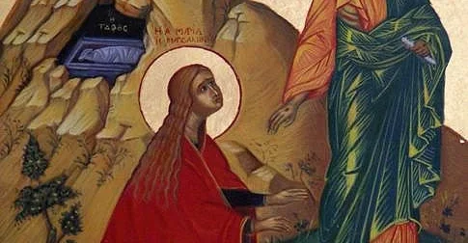
“Supposing him to be the gardener… Jesus said to her, ‘Mary!’ She turned and said to him in Hebrew, ‘Rabbouni!’”
Old Testament Scripture
Genesis 2:8, 15
“And the Lord God planted a garden in Eden… The Lord God took the man and put him in the garden of Eden to till it and keep it.”
A Familiar Setting
Mary Magdalene encounters the risen Jesus in a garden and mistakes Him for the gardener. It is an understandable error through tears. Yet John allows the detail to remain, as though the misunderstanding carries a deeper truth.
The biblical story begins in a garden. God plants Eden and places humanity there “to till it and keep it.” From the beginning, human vocation was cultivation — nurturing life, guarding what God had made, participating in His ordered goodness.
That vocation was fractured by rebellion. The ground was cursed. Thorns replaced fruitfulness. Humanity was driven east of Eden, away from the place where heaven and earth met.
Now, on the first day of the new week, resurrection unfolds in another garden.
That setting is not accidental.
Let me pause a moment for a theological warning. We not begin to look at Jesus in a different light. Most Scholars describe Jeus in this new physical incarnation as – a the next Adam. Hang with me here. It should make sense.
The Second Adam
Paul describes Jesus as the “last Adam” (1 Corinthians 15:45). The first Adam stood in a garden and failed to trust God’s word. The second Adam stands in a garden having obeyed the Father even to death.
In Eden, humanity grasped at life and lost it.
In this garden, Jesus gives His life and receives it back.
Mary believes she is speaking to a gardener. In one sense, she is exactly right.
The risen Christ stands as the true cultivator of a restored creation. He is not merely alive again; He is the beginning of renewed humanity. When He speaks her name — “Mary” — recognition dawns.
Resurrection is not abstract. It is personal. The gardener knows His people.
(Adam was the first gardener – get it now?)
The God who once walked in the garden in Genesis now stands again among His creation, not to pronounce judgment, but to announce restoration. And this takes us to what I find to be anew way to look at the expulsion of Adam and Eve from the garden…
Restored Vocation
Genesis shows that work was not punishment; it was purpose. The tragedy of sin was not that humanity labored, but that labor became burdened with frustration. Resurrection does not abolish human vocation. It restores it. We are placed here to do a job God has assigned for us.
The prophets envisioned a day when deserts would bloom and wastelands would flourish. Easter signals that this renewal has begun. The risen Christ soon sends His disciples into the world. That sending is renewed stewardship. The church becomes a community entrusted with cultivating signs of God’s kingdom.
Gardens grow slowly – mine usually die from over watering … cultivation requires patience. New creation spreads through steady faithfulness.
Living as People Who Cultivate
If Christ is the gardener of the new creation, then those who belong to Him share in His work.
We cultivate reconciliation where resentment once took root.
We guard unity in a world shaped by rivalry.
We plant hope in places long hardened by despair.
This work often feels ordinary and hidden. Seeds disappear before they sprout. Yet the empty tomb assures us that what God plants does not remain buried forever.
Mary begins this morning in grief and ends it as a witness: “I have seen the Lord.” Recognition leads to participation.
The gardener has risen.
And the garden is being restored.
Prayer
Lord of life,
You met Mary in the garden and called her by name.
Call us into Your restoring work.
Teach us to cultivate mercy and guard unity.
Make us faithful participants in Your new creation.
Amen.
New Testament Scripture
John 20:14–16
“Supposing him to be the gardener… Jesus said to her, ‘Mary!’ She turned and said to him in Hebrew, ‘Rabbouni!’”
Old Testament Scripture
Genesis 2:8, 15
“And the Lord God planted a garden in Eden… The Lord God took the man and put him in the garden of Eden to till it and keep it.”
A Familiar Setting
Mary Magdalene encounters the risen Jesus in a garden and mistakes Him for the gardener. It is an understandable error through tears. Yet John allows the detail to remain, as though the misunderstanding carries a deeper truth.
The biblical story begins in a garden. God plants Eden and places humanity there “to till it and keep it.” From the beginning, human vocation was cultivation — nurturing life, guarding what God had made, participating in His ordered goodness.
That vocation was fractured by rebellion. The ground was cursed. Thorns replaced fruitfulness. Humanity was driven east of Eden, away from the place where heaven and earth met.
Now, on the first day of the new week, resurrection unfolds in another garden.
That setting is not accidental.
Let me pause a moment for a theological warning. We not begin to look at Jesus in a different light. Most Scholars describe Jeus in this new physical incarnation as – a the next Adam. Hang with me here. It should make sense.
The Second Adam
Paul describes Jesus as the “last Adam” (1 Corinthians 15:45). The first Adam stood in a garden and failed to trust God’s word. The second Adam stands in a garden having obeyed the Father even to death.
In Eden, humanity grasped at life and lost it.
In this garden, Jesus gives His life and receives it back.
Mary believes she is speaking to a gardener. In one sense, she is exactly right.
The risen Christ stands as the true cultivator of a restored creation. He is not merely alive again; He is the beginning of renewed humanity. When He speaks her name — “Mary” — recognition dawns.
Resurrection is not abstract. It is personal. The gardener knows His people.
(Adam was the first gardener – get it now?)
The God who once walked in the garden in Genesis now stands again among His creation, not to pronounce judgment, but to announce restoration. And this takes us to what I find to be anew way to look at the expulsion of Adam and Eve from the garden…
Restored Vocation
Genesis shows that work was not punishment; it was purpose. The tragedy of sin was not that humanity labored, but that labor became burdened with frustration. Resurrection does not abolish human vocation. It restores it. We are placed here to do a job God has assigned for us.
The prophets envisioned a day when deserts would bloom and wastelands would flourish. Easter signals that this renewal has begun. The risen Christ soon sends His disciples into the world. That sending is renewed stewardship. The church becomes a community entrusted with cultivating signs of God’s kingdom.
Gardens grow slowly – mine usually die from over watering … cultivation requires patience. New creation spreads through steady faithfulness.
Living as People Who Cultivate
If Christ is the gardener of the new creation, then those who belong to Him share in His work.
We cultivate reconciliation where resentment once took root.
We guard unity in a world shaped by rivalry.
We plant hope in places long hardened by despair.
This work often feels ordinary and hidden. Seeds disappear before they sprout. Yet the empty tomb assures us that what God plants does not remain buried forever.
Mary begins this morning in grief and ends it as a witness: “I have seen the Lord.” Recognition leads to participation.
The gardener has risen.
And the garden is being restored.
Prayer
Lord of life,
You met Mary in the garden and called her by name.
Call us into Your restoring work.
Teach us to cultivate mercy and guard unity.
Make us faithful participants in Your new creation.
Amen.
Posted in Easter Season 2026
No Comments