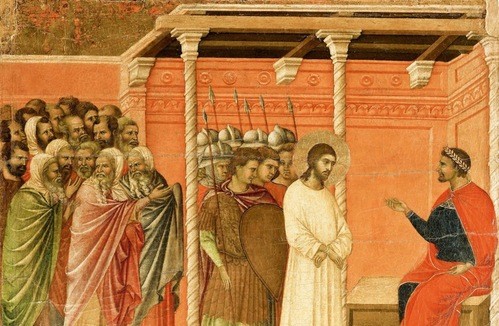
Station 1 — Jesus Is Condemned by Pilate
Scripture: Matthew 27:22–26
“Pilate said to them, ‘Then what should I do with Jesus who is called the Messiah?’ All of them said, ‘Let him be crucified!’ … So he released Barabbas for them; and after flogging Jesus, he handed him over to be crucified.”
The Prophetic Echo
Seven centuries earlier, Isaiah wrote of the Servant of the Lord:
“He was oppressed, and he was afflicted, yet he did not open his mouth; like a lamb that is led to the slaughter…” (Isaiah 53:7).
The condemnation of Jesus was not an accident of history. It was the collision of divine purpose and human injustice.
The Historical Setting
The trial likely took place at the Praetorium — the Roman governor’s headquarters in Jerusalem. Many scholars believe this was either the Antonia Fortress near the Temple complex or Herod’s palace on the western side of the city.
Picture the scene:
Roman soldiers lining the courtyard.
Religious leaders pressing their accusation.
A restless crowd stirred by fear and politics.
A governor balancing justice against stability.
Pontius Pilate was not a cruel tyrant in this moment — he was something perhaps more familiar: a political realist. He saw no crime deserving death. But he feared unrest. And unrest could cost him his position.
So he washed his hands.
Today, along the Via Dolorosa in Jerusalem’s Old City, pilgrims pause at what is traditionally marked as the place where Jesus was condemned. The stone pavement beneath the Convent of the Sisters of Zion is sometimes associated with this moment, though historians debate the exact location.
But wherever it occurred, the reality remains:
The Son of God stood silent while human authority pronounced judgment.
The Theological Weight
This is the moment when innocence is officially declared guilty.
Not by accident.
Not by misunderstanding.
But by choice.
Humanity rejects the righteous One.
Pilate asks the question that echoes through history:
“What shall I do with Jesus?”
The crowd answers with crucifixion.
Yet beneath the human verdict is a deeper mystery:
Christ is not merely condemned by Rome.
He is willingly stepping into the place of the condemned.
The One without sin stands where sinners belong.
Why We Pause Here
We stop at this first station because everything that follows flows from this verdict.
The cross does not begin with nails.
It begins with rejection.
Before the physical suffering comes public dismissal.
Before the blood comes the sentence.
As we prepare for Good Friday, we must understand this:
Jesus was not swept away by events beyond His control.
He stood in the place of judgment so that we would not have to.
Where in your life are you tempted to “wash your hands” of difficult truth?
Where do you see the cost of choosing convenience over courage?
Today we pause — not to judge Pilate — but to recognize how easily we participate in the same patterns.
Prayer
Lord Jesus, You stood silent while judgment fell.
You bore the verdict we deserved.
Give us courage to stand with You when truth is costly.
And let us never forget the weight of this first step toward the cross.
Amen.
Scripture: Matthew 27:22–26
“Pilate said to them, ‘Then what should I do with Jesus who is called the Messiah?’ All of them said, ‘Let him be crucified!’ … So he released Barabbas for them; and after flogging Jesus, he handed him over to be crucified.”
The Prophetic Echo
Seven centuries earlier, Isaiah wrote of the Servant of the Lord:
“He was oppressed, and he was afflicted, yet he did not open his mouth; like a lamb that is led to the slaughter…” (Isaiah 53:7).
The condemnation of Jesus was not an accident of history. It was the collision of divine purpose and human injustice.
The Historical Setting
The trial likely took place at the Praetorium — the Roman governor’s headquarters in Jerusalem. Many scholars believe this was either the Antonia Fortress near the Temple complex or Herod’s palace on the western side of the city.
Picture the scene:
Roman soldiers lining the courtyard.
Religious leaders pressing their accusation.
A restless crowd stirred by fear and politics.
A governor balancing justice against stability.
Pontius Pilate was not a cruel tyrant in this moment — he was something perhaps more familiar: a political realist. He saw no crime deserving death. But he feared unrest. And unrest could cost him his position.
So he washed his hands.
Today, along the Via Dolorosa in Jerusalem’s Old City, pilgrims pause at what is traditionally marked as the place where Jesus was condemned. The stone pavement beneath the Convent of the Sisters of Zion is sometimes associated with this moment, though historians debate the exact location.
But wherever it occurred, the reality remains:
The Son of God stood silent while human authority pronounced judgment.
The Theological Weight
This is the moment when innocence is officially declared guilty.
Not by accident.
Not by misunderstanding.
But by choice.
Humanity rejects the righteous One.
Pilate asks the question that echoes through history:
“What shall I do with Jesus?”
The crowd answers with crucifixion.
Yet beneath the human verdict is a deeper mystery:
Christ is not merely condemned by Rome.
He is willingly stepping into the place of the condemned.
The One without sin stands where sinners belong.
Why We Pause Here
We stop at this first station because everything that follows flows from this verdict.
The cross does not begin with nails.
It begins with rejection.
Before the physical suffering comes public dismissal.
Before the blood comes the sentence.
As we prepare for Good Friday, we must understand this:
Jesus was not swept away by events beyond His control.
He stood in the place of judgment so that we would not have to.
Where in your life are you tempted to “wash your hands” of difficult truth?
Where do you see the cost of choosing convenience over courage?
Today we pause — not to judge Pilate — but to recognize how easily we participate in the same patterns.
Prayer
Lord Jesus, You stood silent while judgment fell.
You bore the verdict we deserved.
Give us courage to stand with You when truth is costly.
And let us never forget the weight of this first step toward the cross.
Amen.
No Comments